
PRIDE Automation Software 9.3.0 is now available
Innovative solutions tailored to your automation needs.

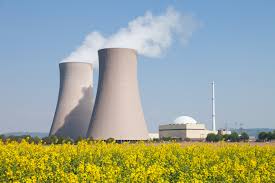
Operational excellence in nuclear energy is non negotiable. From routine maintenance to refueling outages, teams work in environments where precision, verification, and compliance are mandatory. As plants manage aging assets, contractor heavy outages, and tightly controlled work zones, paper based procedures and disconnected systems introduce unnecessary risk.
Nuclear facilities operate under some of the world’s most stringent regulatory frameworks, guided by organizations such as the U.S. Nuclear Regulatory Commission and the International Atomic Energy Agency, alongside industry standards from ASME, IEEE, and IEC. Every task requires documented evidence, independent verification, and strict configuration control.
Daily operations demand disciplined execution across maintenance, surveillance testing, lockout tagout, startup and shutdown activities, and refueling outages. Asset reliability spans safety related systems, balance of plant equipment, aging management programs, and inspection regimes. Environmental monitoring, radiation protection, waste handling, and emergency preparedness add further complexity.
At the same time, nuclear organizations must maintain strong cybersecurity and network segmentation while introducing modern digital tools. Workforce turnover, contractor intensive outage periods, and limited connectivity in radiologically controlled or restricted areas make consistent execution even harder.
Many nuclear teams still rely on static documents and manual signoffs to manage complex work. These approaches slow execution, fragment evidence, and make it difficult to enforce critical steps in real time. During outages and safety system testing, even small inconsistencies can ripple into schedule delays, compliance challenges, or human performance events.
PRIDE Automation digitizes nuclear plant execution while preserving the rigor required for safety and compliance.
Standard operating procedures and electronic work packages guide operators through maintenance, surveillance testing, refueling activities, and startup or shutdown with enforced sequencing and verification. Work authorization processes such as lockout tagout, clearance orders, and safety tagging are orchestrated with built in approvals and independent checks.
Operator rounds and field data collection are guided digitally, capturing readings, radiation surveys, and inspection results with full traceability. Maintenance, calibration, and safety system testing are standardized across inspections, valve and actuator testing, instrument calibration, and surveillance requirements, ensuring complete as found and as left documentation.
Outage execution is supported through digital task packages, contractor signoffs, turnover control, punchlist tracking, and variance management. Training drills and emergency preparedness exercises are also delivered through guided digital workflows, helping teams maintain readiness for abnormal or emergency scenarios.
PRIDE delivers digital procedures with enforced sequencing, conditional logic, and critical step controls that prevent progression until verification is complete. Independent verifications, peer checks, and supervisor signoffs create audit ready execution records.
Field teams capture photos, video, and measurements with timestamps, user identity, and asset context, even in offline or restricted areas using approved mobile devices. Version control ensures strict configuration management of procedures with controlled releases and training alignment. Built in analytics provide visibility into procedure adherence, execution duration, outage performance, surveillance completion, and recurring execution issues.
PRIDE fits seamlessly into nuclear technology ecosystems while aligning with strict cybersecurity and access control policies.
The platform integrates with historians such as AVEVA PI System and AspenTech IP.21, maintenance platforms like SAP and IBM Maximo, and operational systems from Emerson Electric, Honeywell, and Siemens where permitted.
Document and records management integrates with Microsoft SharePoint and OpenText, while identity and access management is supported through Microsoft Azure Active Directory and Okta, enabling role based access, MFA, and detailed audit logging.
Organizations using PRIDE report stronger procedure adherence, improved safety margins, and faster regulatory readiness. Human performance events decrease through enforced critical steps and independent verification. Outage performance improves with clearer handoffs, stronger contractor accountability, and more predictable schedules.
Administrative effort drops as execution data and evidence are captured automatically. Equipment reliability improves through standardized maintenance and surveillance execution, while workforce effectiveness increases through guided procedures that accelerate onboarding without compromising nuclear safety culture.
The nuclear industry is steadily adopting digital work management, computer based procedures, and connected worker platforms to replace paper based execution. Predictive maintenance and asset health monitoring are increasingly used to support aging management and long term reliability.
Digital twins and advanced simulators are expanding their role in operator training, outage planning, and scenario analysis. Robotics and remote systems are gaining traction for inspections and work in high radiation or hard to access areas, reducing personnel exposure while improving coverage. Automation is also transforming regulatory reporting, records management, and compliance analytics, helping nuclear operators maintain high safety standards while improving efficiency.
PRIDE sits at the center of this evolution, turning nuclear procedures into intelligent, connected workflows that scale safely with the industry.
Discover how PRIDE helps nuclear facilities improve procedure adherence, strengthen safety margins, and streamline outages through intelligent digital execution. Book a demo to see connected nuclear operations in action.
